
From the spate-irrigated lowlands and highlands of Eritrea to center-pivot sugarcane in Mauritius to Feed the Future research projects in Ethiopia and Bangladesh, the lesson has been the same: the problem was never the water. It was everything around it.
Starting in the soil
I didn’t come to irrigation through a boardroom. I came to it through the ground. I trained as a soil and water conservationist, and I learned my first lesson in the highlands and lowlands of Eritrea as an extension agent. The inhabitants of Eritrea have traditionally practiced various irrigation techniques such as spate irrigation — locally called “jeriff” — for generations, diverting the brief, violent floods that rush down onto their fields. In the coastal areas, only around 14,000 hectares are developed that way, a sliver of what’s possible, but the ingenuity of it stayed with me.
My second lesson took place on the distant island of Mauritius in the Indian Ocean. I worked on irrigation efficiency for a large commercial sugarcane operation running center pivots — machines that traverse the fields, following a programmed schedule, a world away from hand-cut flood channels. The core discipline turned out to be identical: a pivot only earns its cost if the water is matched precisely to the crop and spread evenly. Expensive equipment and automation require even more attention to management. After Mauritius, I spent more than a decade as one of the irrigation experts at the United States Agency for International Development (USAID), monitoring research projects including the Feed the Future Innovation Lab for Small Scale Irrigation (ILSSI), the Cereal Systems Initiative for South Asia (CSISA), and the work of embedding irrigation into the African Union’s CAADP via the Policy, Evidence, Analytics, Research and Learning (PEARL, implemented by IFPRI).
A fifth of the land, two-fifths of the food
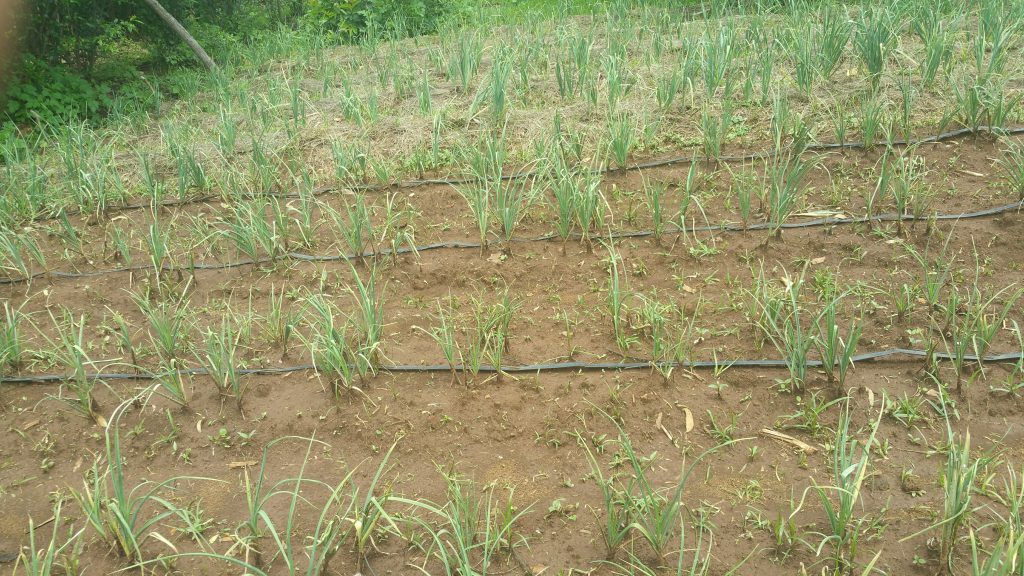
Irrigated farmland is only about a fifth of the world’s cropland, yet it produces roughly 40% of our food, and in water-scarce areas it typically doubles yields compared with rainfed farming (World Bank, 2026d). That headline hides real variation — irrigation supplies more than half of the maize, wheat, and rice grown in China and Egypt, but only 20–40% of U.S. maize (Ai et al., 2024) — but the punchline holds: for much of the world, irrigation is decisive for food security.
Sub-Saharan Africa irrigates only about 6% of its cropland, even as global food demand is set to rise more than 70% by 2050 — when the world will need to feed roughly 10 billion people (World Bank, 2026d). And the stakes are not abstract. In 2025, about 645 million people still faced hunger, 309 million of them in Africa, where more than half the population is moderately or severely food insecure and a healthy diet is still out of reach for two-thirds (FAO et al., 2026). That gap — between what irrigation could grow and what Africa actually harvests — has been the paradox at the center of my career.
What actually makes irrigation work
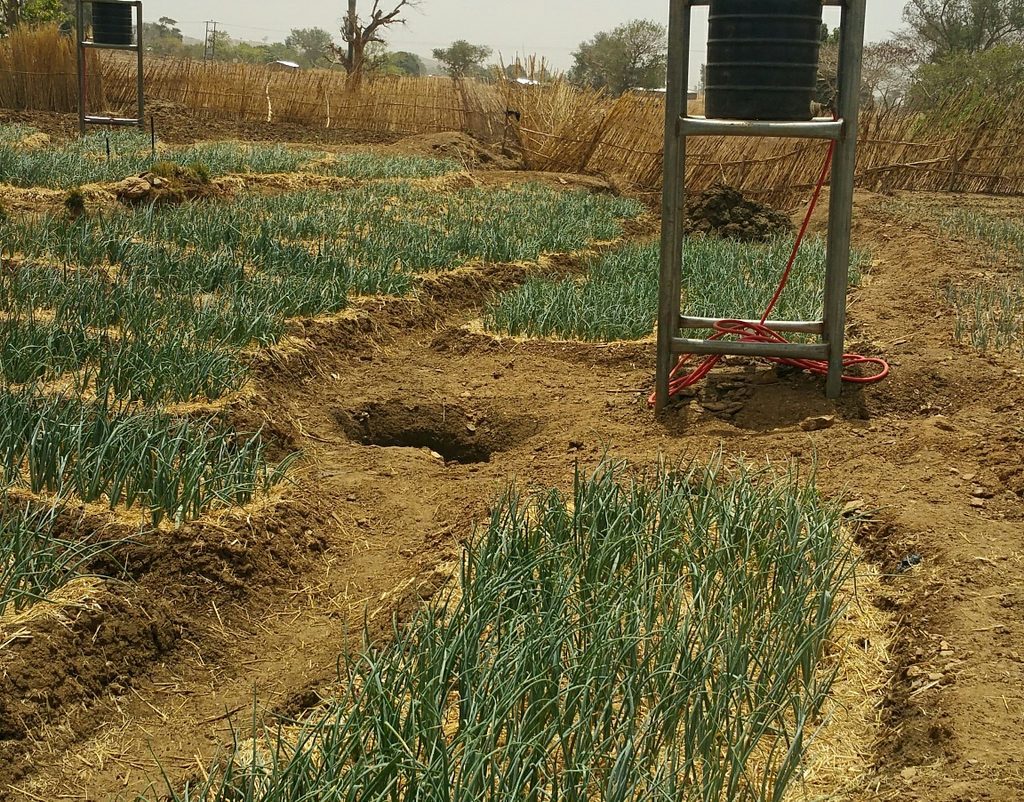
If I could compress my fieldwork into one sentence: irrigation is not an engineering problem; it’s a systems problem. The pumps almost always work. What fails is everything around them.
I first made this observation watching those Mauritian center pivots, which only paid off with disciplined scheduling and energy management. I witnessed the systemic nature of the problem on two continents. In Bangladesh, some of the technical breakthroughs were not complicated, such as a low-lift axial flow pump that, at lifts of a meter or two, delivered 20–50% more water per liter of fuel than the centrifugal pumps farmers were using (Santos Valle et al., 2014). But the pump wasn’t the lesson; the lesson was what was built around it: local manufacturing, dealer and repair networks, rehabilitated canals, and trained service providers along with rigorously studied agronomic practices and crop breeding. Across sub-Saharan Africa, with ILSSI, the same truth wore a different accent — the strongest model was farmer-led irrigation, where farmers invest in their own solar or motorized pumps because it pays, backed by affordable finance, private supply chains, and deliberate attention to nutrition, gender and groundwater governance (Lefore et al., 2023).
In northern Nigeria — where under 1% of farmland is irrigated — a World Bank–backed project expanded irrigation across 43,400 hectares, roughly doubled rice yields, and, crucially, built more than 800 Water Users’ Associations to manage the water; it now helps feed about a million people (World Bank, 2025). In Ethiopia’s farmer-led irrigation development (FLID) model, farmers choose the system, co-finance it (30% for solar, 60% for diesel), and receive training to operate and maintain it — an approach the World Bank credits with boosting productivity, resilience, and incomes (World Bank, 2026b). Controlled research finds the same pattern. A systematic review of 60 sub-Saharan African studies finds that irrigation and related innovations yield stronger resilience outcomes when delivered as integrated packages rather than in isolation, with effectiveness constrained by limited financing, weak governance, and fragmented institutions (Maphalala et al., 2026). In Benin, for example, households benefiting from an integrated irrigation project — combining infrastructure, training, and access to finance — showed higher well-being and lower food insecurity than matched non-beneficiaries (Ahoudjo et al., 2026).
Whether it’s a pivot, a pump, or a canal, the machine is never enough. That is why I advocate for irrigation to be an integral part of national development policies. Unless water is built into the plan, it stays an afterthought.
The opportunity
The upside is enormous. The World Bank estimates that converting suitable rainfed land to irrigation could create up to 218 million jobs in sub-Saharan Africa — on the order of four jobs per newly irrigated hectare (World Bank, 2026d). And the capital is beginning to move: Ghana’s 2026 AgriConnect Compact, a roughly $3.5 billion framework targeting 2.6 million jobs by 2035, includes irrigation among six agrifood pillars (World Bank, 2026c), while Ethiopia is financing a new generation of climate-resilient irrigation (World Bank, 2026a). According to the ILSSI Legacy Report (Lefore et al., 2023), the potential annual net profit from scaling small-scale irrigation across suitable areas is estimated at around $2.6 billion in Ethiopia (~1,000,000 ha), $781 million in Tanzania (~750,000 ha), and $285 million in Ghana’s Northern Region (~115,000 ha). Set against a continent where hunger is still measured in the hundreds of millions (FAO et al., 2026), the direction is clear.
But the opportunity is captured only by whoever masters the system, not just the hardware — the finance, the markets, the governance, the rights. Integration does not by itself guarantee equitable outcomes: in Senegal’s River Delta, where irrigation infrastructure is long established, only around 7% of surveyed producers generate profits while most run net income deficits, and landholdings are concentrated among a minority of large-scale, often absentee investors (Sylla et al., 2026).
That’s why I founded Habeerna LLC — to keep treating irrigation as a system: integrating agronomy, market analysis, and policy; optimizing water for specific, marketable crops; and deliberately establishing local water governance and securing legal water rights, alongside small-scale, precision, and solar-powered technologies. Please feel free to contact me at biniamiyob@habeerna.com with questions or comments, or if you’d like to collaborate.
Biniam Iyob, PhD, Founder and CEO, Habeerna, LLC
References
Ahoudjo, N. C., Tchokponhoue, H. A., Dohou, M. D., & Yabi, J. A. (2026). Impact of an irrigation project on household well-being and food security in Benin. Frontiers in Sustainable Food Systems, 10, 1833827. https://doi.org/10.3389/fsufs.2026.1833827
Ai, Z., Boulange, J., Zhao, X., Li, F., Mahmood, R., Manevski, K., Yang, Y., & Yu, G. (2024). Contribution of irrigation to the production of maize, wheat, and rice in the major global producing countries. National Science Review, 11(11), nwae374. https://doi.org/10.1093/nsr/nwae374
FAO, IFAD, UNICEF, WFP, & WHO. (2026). The State of Food Security and Nutrition in the World 2026: Understanding and addressing the high cost of a healthy diet. FAO. https://doi.org/10.4060/cd8306en
Lefore, N., Stellbauer, M., & Kunkle, A. (2023). Feed the Future Innovation Lab for Small Scale Irrigation: Legacy Report (2013–2023). Texas A&M University. https://borlaug.tamu.edu/wp-content/uploads/sites/3/2023/11/ILSSI-Legacy-Report-2013-23_111623-300.pdf
Maphalala, L., Kolanisi, U., Naidoo, D., & Mdoda, L. (2026). Innovations and policies for climate-resilient food and water systems in sub-Saharan Africa: A systematic review. Frontiers in Sustainable Food Systems, 10, 1796985. https://doi.org/10.3389/fsufs.2026.1796985
Santos Valle, S., Qureshi, A. S., Islam, M. S., Hossain, M. A., Gathala, M. K., & Krupnik, T. J. (2014). Axial flow pumps can reduce energy use and costs for low-lift surface water irrigation in Bangladesh. Cereal Systems Initiative for South Asia (CSISA), International Maize and Wheat Improvement Center (CIMMYT). https://csisa.org/wp-content/uploads/sites/2/2014/05/140806-CSISA-MI-AFP-REPORT-FINAL.pdf
Sylla, E. H. M., Ba, B., Diop, K., Barbier, B., Seck, S. M., & Van Damme, P. (2026). Irrigation and inequalities in the Senegal River Delta. PLoS ONE, 21(4), e0325862. https://doi.org/10.1371/journal.pone.0325862
World Bank. (2025, October 15). How smarter irrigation is changing Nigerian farming. https://www.worldbank.org/en/news/feature/2025/10/15/how-smarter-irrigation-is-changing-nigerian-farming
World Bank. (2026a). Ethiopia: Climate Resilient Irrigation for Sustainable Production (CRISP) – Appraisal Environmental and Social Review Summary (Project P508364). https://documents1.worldbank.org/curated/en/099021126014598644/pdf/P508364-b3a6d289-bcd5-4d58-b683-d90f2ce52221.pdf
World Bank. (2026b, January 20). Farmer-driven, government-facilitated: A new approach to Ethiopia’s irrigation development. https://www.worldbank.org/en/news/feature/2026/01/20/farmer-driven-government-facilitated-a-new-approach-to-ethiopias-irrigation-development
World Bank. (2026c, June 3). Ghana launches AgriConnect Compact to strengthen food security, create jobs, and mobilize investment [Press release]. https://www.worldbank.org/en/news/press-release/2026/06/03/ghana-launches-agriconnect-compact-to-strengthen-food-security-create-jobs-and-mobilize-investment
World Bank. (2026d). Water for food. https://www.worldbank.org/ext/en/topic/water/water-for-food